Music Words in English for Kids
Music words in English for kids start with a small, teachable set — about fifteen everyday terms like sing, clap, beat, drum, loud, and slow — that a child can use the first time you play a song together. This guide on Music Words in English for Kids: Words and Activities gives you the core vocabulary, short example sentences, and simple activities you can run at home with nothing more than a pot, a spoon, and a favourite tune. Children ages 4 to 15 pick these words up fast because music gives each word a sound, a movement, and a reason to repeat it, so the vocabulary sticks without drills.
📥 Music Words Practice Sheet
Learn useful music vocabulary and practise using it in context.
Leave your email — we'll send the PDF to your inbox.No spam — the PDF plus one short reminder. Unsubscribe anytime.
Core Words and Phrases
Begin with words a child can hear and copy right away. Action words work best for young learners: sing, clap, dance, play, tap, and listen. Pair each one with a movement so the word carries meaning before your child ever reads it.
Next come the sound words that describe music: loud, quiet, fast, slow, high, and low. These double as everyday adjectives, so the effort pays off outside music too. Then add the naming words — song, beat, rhythm, note, melody, drum, guitar, and piano. Older children ages 10 to 15 can stretch into chorus, verse, lyrics, tune, and volume.
A handful of ready-made phrases turns single words into real talk: "Turn it up," "Sing with me," "Clap to the beat," "That song is too loud," and "Play it again." Model the phrase, then let your child echo it.
Examples in Context
A word is easier to remember inside a short sentence a child would actually say. The table below groups the main music words by type and gives one plain example for each, so you can read the rule and the example side by side.
Read each sentence aloud, then swap one word and ask your child to do the same: change "drum" to "piano", or "loud" to "quiet". Small swaps show how one sentence frame carries dozens of words.
Activities by Age
The best activities for Music Words in English for Kids: Words and Activities match the child's age and attention span. For ages 4 to 6, keep it physical. Play a short clip and call out one action word — "clap", "stamp", "dance" — and move together. Freeze when the music stops and name the sound: "That was fast!"
For ages 7 to 9, add naming and describing. Give your child three word cards (beat, loud, slow) and ask them to hold up the right card while a song plays. First-time online learners especially benefit here, because one clear task beats a long explanation.
For ages 10 to 15, work with real lyrics. Print the words to a simple English song, underline five music words, and talk about what each one means in that line. Across LearnLink lessons, tutors use familiar songs this way so vocabulary connects to something the child already enjoys.
Practice Ideas
Short, repeated practice beats one long session. These practice ideas for Music Words in English for Kids: Words and Activities need no special equipment, and you can fold them into ordinary days.
Three Five-minute Music Games
Kitchen drum. Turn a pot upside down and tap a steady beat. Say "loud", "quiet", "fast", "slow" and let your child match the drumming to each word.
Sound hunt. Play two songs and ask: "Which one is slow? Which one is loud?" Your child answers in a full sentence — "The first song is slow."
Sing and swap. Sing a known line, then replace one music word each round. This builds the words through movement and voice at the same time, and takes under five minutes.
As of 2026, families around the world use these same low-prep games during the week, and tutors review the words in the next lesson so nothing is lost between sessions.
Common Mistakes
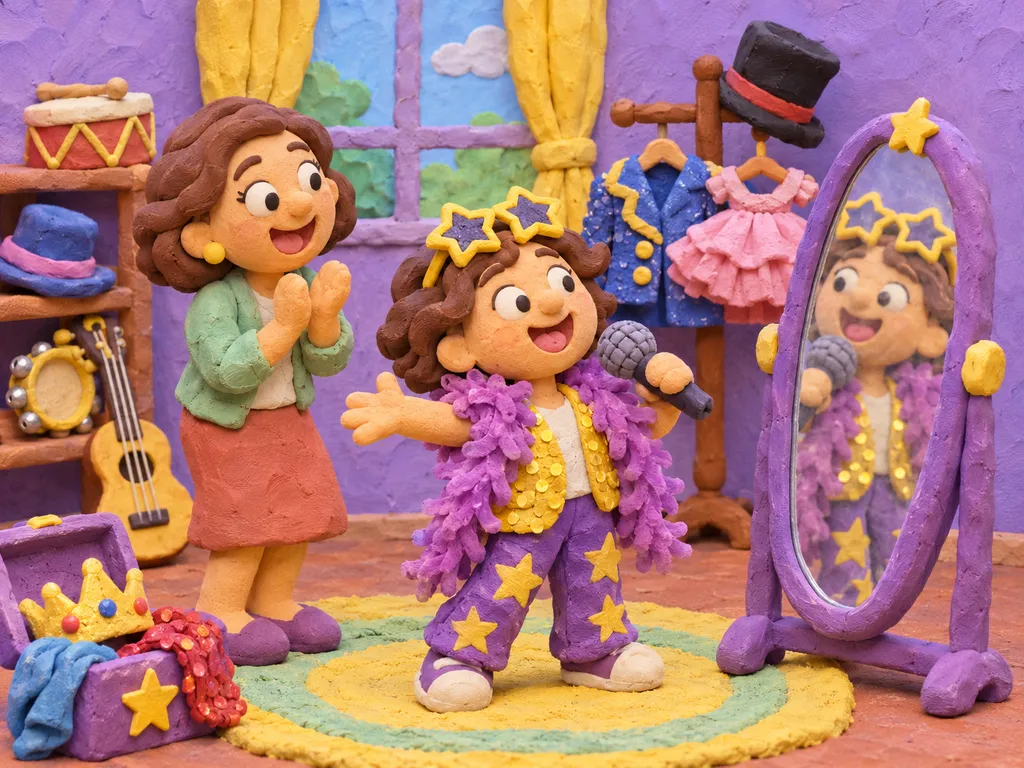
One frequent slip is teaching the words without sound. Flashcards alone turn music vocabulary into just another list; the point of Music Words in English for Kids: Words and Activities is that children hear and feel each word. Always pair the word with a tune, a clap, or a movement.
A second mistake is mixing up close pairs. Children often say "high" when they mean "loud", or "fast" when they mean "loud". These describe different things — pitch, volume, and speed — so correct gently with a clear example: "That is loud. Now listen to this high note."
Finally, avoid overloading. Five new words a week, well practised, outlast twenty words rushed in one sitting. Reuse last week's words inside this week's songs so the set grows slowly and stays solid.
- Practice 5 new music words daily using flashcards for just 10 minutes.
- Sing one simple English song together each evening before bedtime this week.
- Use real instruments at home to label drum, guitar, and piano in English.
- Play a matching game pairing music words with pictures for school-age kids.
- Read one English picture book about music or instruments together tonight.
When a word has several meanings or pronunciations, Cambridge Dictionary is a useful check before turning it into child-friendly examples.
Frequently Asked Questions
At What Age Can My Child Start Learning Music Words in English?
Children as young as four can start with action words like sing, clap, and dance, because the movement carries the meaning. From ages 7 to 9, add naming and describing words such as beat, melody, and loud. Teenagers can work with real lyrics and talk about what each word means in context. Match the words to what your child can comfortably say and do today.
Do I Need to Play an Instrument to Teach These Words?
No. A pot and a spoon, your own voice, or any song on your phone are enough. The value in Music Words in English for Kids: Words and Activities comes from hearing, moving, and repeating — not from musical skill. Tap a steady beat on the table, name it, and let your child copy you. If you can hum a tune and clap along, you already have everything you need to start.
How Many Music Words Should My Child Learn Each Week?
Around five new words a week is a steady, realistic pace for most children ages 4 to 15. Introduce them inside one song, practise for a few minutes daily, then reuse the same words the following week alongside a few new ones. Fewer words that your child uses confidently are worth more than a long list half-remembered.
What If My Child Already Speaks Two or Three Languages?
Multilingual children often learn music words quickly, because rhythm and song are shared across languages. Let your child connect the English word to a song they already know in another language — the melody is the same, only the words change. This helps them feel that English is one more tune to sing, not a wall to climb.
A short one-to-one lesson can show what level and pace fit your child — book a trial English lesson.
Stay updated on our latest tips and resources by following us on Instagram LearnLink.